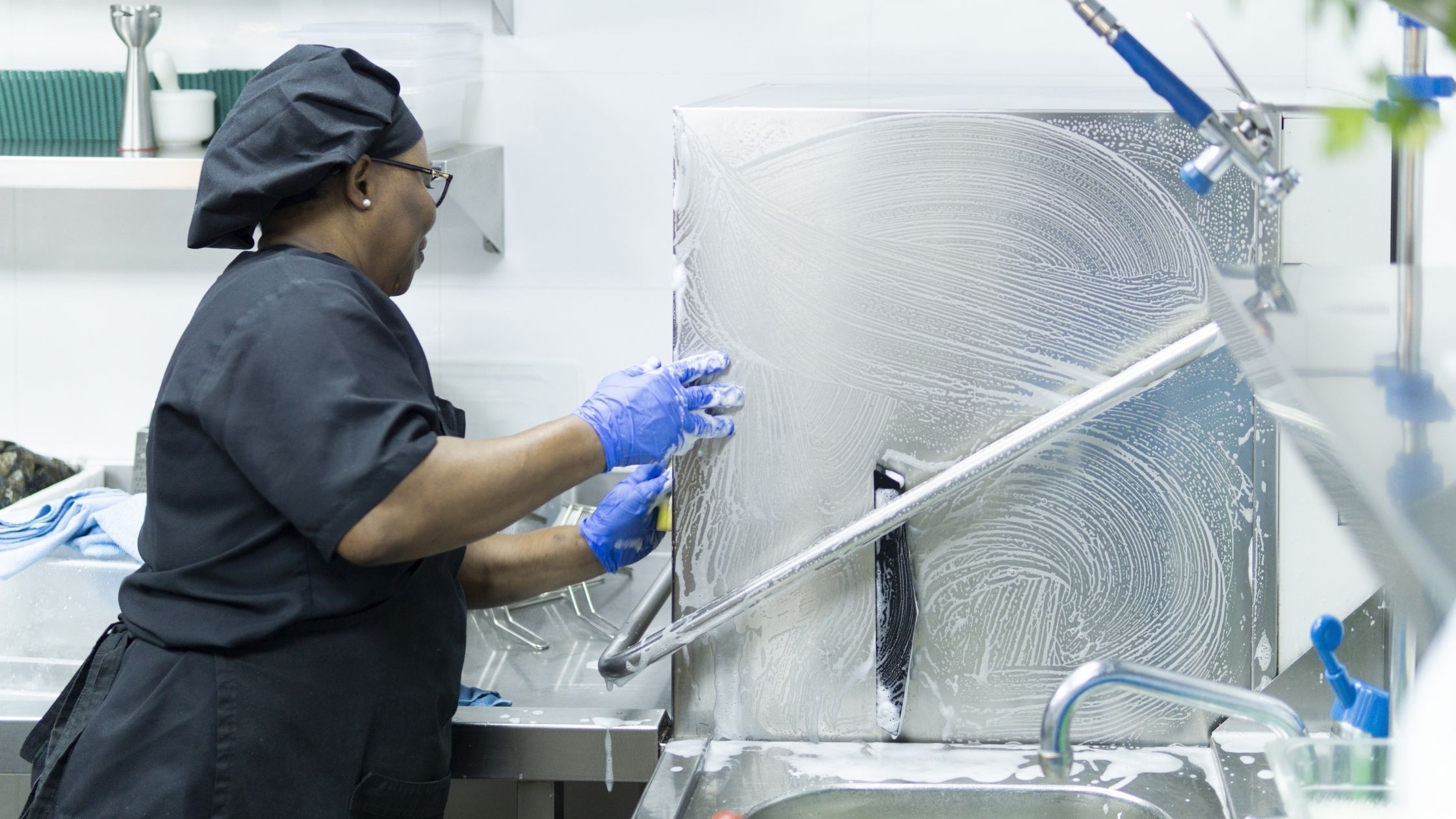
A commercial kitchen needs more than a wipe-down at the end of service. Grease, food residue and grime build up around the cooking line, the extraction, the prep areas and all the spots you can't easily get to. It happens even in a kitchen that's cleaned every day.
That's what a commercial kitchen deep clean is for.
A proper deep clean gets into the areas a daily clean skips, so the kitchen stays hygienic, safe and on top of the mess rather than slowly losing to it.
It's a thorough clean of the equipment, surfaces and areas in a professional kitchen that need more than the daily routine.
What's involved depends on the kitchen, the equipment and how hard it gets used. A deep clean can take in:
The point isn't to keep the kitchen ticking over between services. It's to shift the built-up grease, carbon and food deposits that daily cleaning leaves behind.
Every kitchen's different, so the plan should come off the layout, the equipment, the environment and how heavily it's worked. There's no one checklist that fits every site.
That said, a few areas nearly always need attention.
Ovens, fryers, griddles and the rest pick up grease and carbon fast.
Getting it off without wrecking the equipment means the right methods and the right products for each bit of kit, not one spray for everything.
Extraction collects grease over time, all through the system, not just the bit you can see.
Canopies, filters and the accessible parts of the run all need doing as part of a proper programme. Extraction and ventilation cleaning is specialist work and has to be done to suit the system, not guessed at.
Work surfaces and prep areas need a thorough clean to shift food residue and the dirt that builds up.
A deep clean also gets to the areas that never get touched during a busy service.
Fridges, chilled storage and food storage get overlooked in the daily clean.
A proper job looks at the visible surfaces and the accessible spots where residue and dirt gather out of sight.
Grease doesn't just land on the cooking equipment.
Walls, splashbacks and nearby surfaces build up a film of grease and grime, worst in a busy kitchen. Getting them back can take more than a wipe.
Kitchen floors cop food debris, grease, dirt and heavy foot traffic every single day.
A deep clean pays attention to around and under the equipment, and the other places a mop never reaches on a normal shift.
No single frequency works for every kitchen.
A busy restaurant turning out hundreds of covers a day is a different job to a small workplace kitchen. What suits one won't suit the other.
Roughly, it comes down to:
| Factor | Why it matters |
|---|---|
| Kitchen size | More equipment and surface area to keep on top of |
| Daily usage | Heavier use means more grease, residue and dirt |
| Type of cooking | Frying and high-heat cooking throw out more grease |
| Equipment | Different appliances want different cleaning schedules |
| Extraction system | Extraction needs proper inspection and cleaning on its own cycle |
| Existing cleaning routine | A good daily clean cuts the build-up between deep cleans |
Daily cleaning carries on through the week. The deeper specialist work gets scheduled to suit the kitchen and the kit.
Routine cleaning keeps the kitchen under control day to day. Deep cleaning goes into the areas that don't get dealt with the rest of the time.
| Routine kitchen cleaning | Deep kitchen cleaning |
|---|---|
| Cleaning worktops | Thorough clean of prep areas |
| Wiping equipment | Detailed clean of cooking equipment |
| Cleaning floors | More intensive floor cleaning |
| Emptying bins | Cleaning around and under equipment |
| Cleaning sinks | Detailed clean of wash areas |
| General surface cleaning | Shifting built-up grease and grime |
| Regular maintenance | Periodic heavier cleaning |
Both matter. A deep clean doesn't replace a good daily routine, it works alongside it.
Commercial kitchens deal with constant use, food prep and high heat. The cleaning has to match that, not a one-size approach borrowed from an office.
Done properly, professional kitchen cleaning helps a business keep the place cleaner, get on top of accumulated grease, reach the spots that never get done mid-service, keep the equipment and surrounds maintained, support good hygiene practice, and take some of the weight off the periodic deep clean.
Whatever's used, the method and the product have to suit the surface or the kit being cleaned. That's the bit that separates it from someone just spending longer with a cloth.
Extraction deserves its own mention.
Grease works its way up into the extraction components, which is why it's specialist work rather than wiping the front of a canopy and calling it done.
LCS has experience with commercial kitchen cleaning, extraction included. What the cleaning actually needs depends on the system and how the kitchen runs, so the sensible move is a proper cleaning and inspection schedule set to the premises.
Signs it's due a heavier clean:
In a busy kitchen, leaving it until the grease is obvious just makes the eventual clean a bigger job. A planned mix of daily cleaning and periodic deep cleans is a lot easier to stay on top of.
Kitchen cleaning is more than having a cleaner spend an extra hour in there.
Look for a company that can show real commercial experience and actually understands the different demands of cooking equipment, prep areas and extraction.
Worth asking:
At LCS every commercial site starts with an assessment of the building, the footfall, the risk areas and the operating hours, then a schedule built around it.
LCS provides commercial and specialist cleaning for businesses across Northamptonshire, with programmes built around the individual premises.
That includes commercial kitchen cleaning covering the cooking equipment, extraction, prep areas and the rest of the kitchen environment. It sits alongside our wider commercial cleaning and deep cleaning and floor care.
If your kitchen's due a periodic deep clean, or you're not sure your current setup is keeping pace with the place, get in touch and we'll arrange a free site survey.
It can cover cooking equipment, ovens, fryers, griddles, extraction canopies and filters, prep areas, refrigeration, walls, floors and the hard-to-reach spots. The exact scope depends on the kitchen and the equipment.
No universal schedule. It comes down to kitchen size, daily usage, cooking methods, equipment and the existing routine. Busy kitchens tend to need specialist cleaning more often.
By shifting built-up grease, food residue and dirt from equipment, surfaces and the areas a daily clean doesn't fully reach, with methods suited to the particular kit and surfaces.
Routine cleaning keeps the kitchen going between services. Deep cleaning goes after the built-up dirt, grease and harder-to-reach areas. Most kitchens need both.
It can. Canopies, filters and the accessible parts of the extraction can need specialist cleaning depending on the system, and it should sit within a proper maintenance schedule.
Yes. It's usually scheduled around opening hours to keep disruption down. The timing depends on the kitchen's hours and how much cleaning's involved.