
Walk into a gym and you notice the cleaning straight away. Sticky handles. A smeared mirror. That damp smell drifting out of the showers. Members pick up on it fast, and it shapes what they think of the whole place.
Gym cleaning covers a lot of ground. Equipment gets grabbed all day long, floors take a constant battering, and the changing rooms, showers and toilets need real attention rather than a quick pass on the way out. A proper gym cleaning service has to be built around how the building actually runs. Not dropped in as a standard commercial clean.
So what should the spec include, and how often does each area need doing? Here's how we'd break it down.
The short answer: everywhere members, staff and visitors go.
The detail depends on the site. Size, opening hours, footfall, how many changing rooms, whether there are showers. A small studio and a big health club are not the same job. Most gym cleaning programmes cover the same core areas though:
| Area | What usually gets cleaned |
|---|---|
| Gym equipment | Handles, grips, controls, screens and the surfaces people touch most |
| Exercise areas | Floors, dust, and the space around the machines |
| Changing rooms | Floors, benches, lockers, mirrors, touchpoints |
| Showers | Floors, walls, fittings, drainage |
| Toilets | Toilets, sinks, cubicles, floors, taps |
| Reception | Counter, floor, doors, communal surfaces |
| Communal areas | Seating, tables, floors, high-touch points |
| Waste | Bins emptied, general waste cleared |
The spec should be tailored to the building. A generic checklist applied to every gym misses the bits that actually matter for yours.
This is the part that gets handled most, so it's the part that shows first.
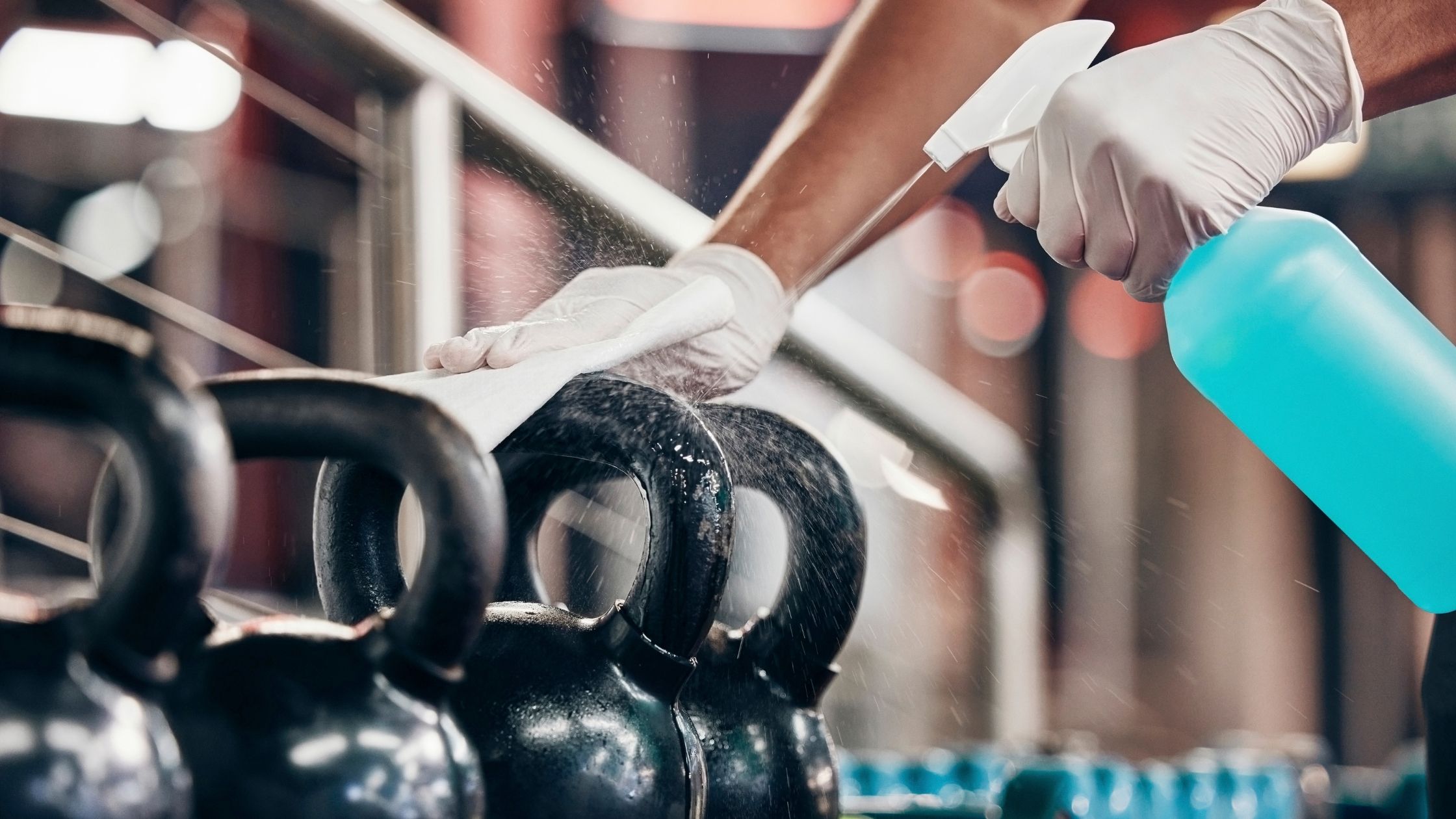
Treadmills, bikes, the weights machines, benches, free weights. Dozens of pairs of hands on them across a day. The grips, control panels and touch points are where the attention needs to go:
One catch though. Cleaning products have to suit the kit. Some machine finishes and screens don't take kindly to harsh chemicals, so the method should match what the manufacturer allows. The goal isn't equipment that looks clean for five minutes. It's a routine that gets repeated properly, every visit.
Gym floors cop dust, grit, sweat and spills, and they do it quickly in the busy zones.
How you clean them comes down to what's down there. Rubber matting, vinyl, carpet tiles and hard flooring all want different handling, so a decent programme checks the floor type before settling on products and frequency. Get that wrong and you either leave it dirty or wreck the surface.
Regular floor cleaning tends to mean:
Dirty floors get noticed. Especially in the free-weights area and anywhere with heavy footfall.
Changing rooms take a hammering, and in a busy commercial gym they need doing far more often than most people expect.
A changing room clean usually runs across the floors, benches, locker surfaces, mirrors, doors and handles, sinks and bins, plus every touchpoint in between. The frequency has to track how hard the room gets used. Peak-time changeovers at a large gym are a different world from a quiet studio with a handful of members.
Showers are the area that catches people out.
Constant moisture, soap residue, body oils, wet floors all day. That combination builds up fast. So showers can't just ride along as part of an occasional deep clean. Floors, walls, fittings, the surrounds and the drainage all want regular attention. The spec should spell out what gets done daily and what's held back for the deeper periodic clean.
Washrooms are the obvious one, and footfall drives everything here.
Depending on the agreed spec, a toilet clean covers:
A packed gym might need these checked several times a day. A smaller site, less so. The schedule should reflect the actual usage, not a flat number picked off a template.
Big surfaces are easy to remember. It's the small stuff that slips.
Door handles, push plates, handrails, reception counters, machine controls, locker handles, taps, washroom fittings. All grabbed constantly, all easy to skip if they're not written down. Name them in the spec or they get left.
There's no single answer that fits every gym.
A sensible schedule hangs on footfall, opening hours, member numbers, the size of the place, how much equipment there is, and whether you've got showers and multiple changing rooms to service. A gym open from 5am to 11pm has different needs to a boutique studio running a few classes a day. A cleaning company should look at the building first, then build the schedule around it.
Day to day, that's the equipment, exercise areas, floors, changing rooms, showers, toilets, reception and the high-touch points, plus waste out. Frequencies set by how the place runs.
Then there's the deep clean sitting behind the daily routine.
This is where the harder jobs get done. Floors stripped back, the awkward corners, equipment surrounds, anything the daily visit doesn't reach. It backs up routine cleaning rather than replacing it, and how often you need it depends on how hard the gym gets used.
A simple checklist keeps the important areas from slipping. Adapt it to your own layout and drop it into the wider schedule.
Equipment and exercise areas
Changing rooms
Showers and toilets
Reception and communal
Price is the easy thing to compare. It's also the thing that tells you least.
Ask what's actually in the service, and whether they'll shape it around your building:
| Question | Why it matters |
|---|---|
| What areas are included? | So equipment, floors and changing facilities don't get left out |
| Can the schedule be tailored? | Every gym runs differently |
| Can you work around our opening hours? | Keeps disruption to members down |
| Are showers and changing rooms covered? | These need the most work and get skipped most |
| How do you check standards? | Consistency slips without it |
| Can the spec change as we do? | Usage and facilities shift over time |
A good spec makes it obvious what's cleaned, how often, and who's on the hook for it.
Most gyms need cleaning daily, though it depends on footfall, opening hours and the facilities on site. Busy commercial gyms often get cleaned every day, sometimes with washrooms and high-touch areas checked more than once. Smaller studios can get away with less. There's no set schedule that suits every site.
Equipment, floors, changing rooms, showers, toilets, reception, communal areas, high-touch surfaces and waste removal. The exact list gets agreed around the size and layout of the gym.
Frequently handled equipment should be part of the daily routine, with the pace set by how heavily it's used. Handles, grips, controls, benches and seats are the priority.
Yes. They're usually the hardest-working areas in the building, so they belong in the spec wherever they're part of the facility. That covers floors, benches, lockers, mirrors, shower areas, sinks, toilets and fittings.
Periodic deep cleaning backs up the daily routine and gets to the areas a normal visit doesn't reach. How often you need it comes down to how hard the gym gets used. It sits alongside routine cleaning rather than replacing it.
The main areas: equipment, floors, changing rooms, showers, toilets, reception, communal spaces, high-touch points and waste. Then adapt it to your own layout and kit.
Yes. Cleaning can be scheduled around quieter periods, or before and after the gym is open, keeping it out of members' way. The right timing depends on your hours and how much cleaning the site needs.
Same basic principles, different environment. Gym cleaning has to account for exercise equipment, sweat, heavy footfall, showers and changing rooms, so the spec is built around how a gym is used rather than treated like an office.
LCS provides commercial cleaning across a range of business premises, and gym cleaning is part of that.
The programmes are built around each site rather than run off one standard spec, which matters when you've got equipment, changing rooms and showers all pulling in different directions. LCS also has experience cleaning a training-ground facility, covering changing rooms, offices, a canteen and gym space.
Running a gym or fitness facility and want the cleaning handled properly? LCS can look at your site and put together a programme around how you actually operate.
