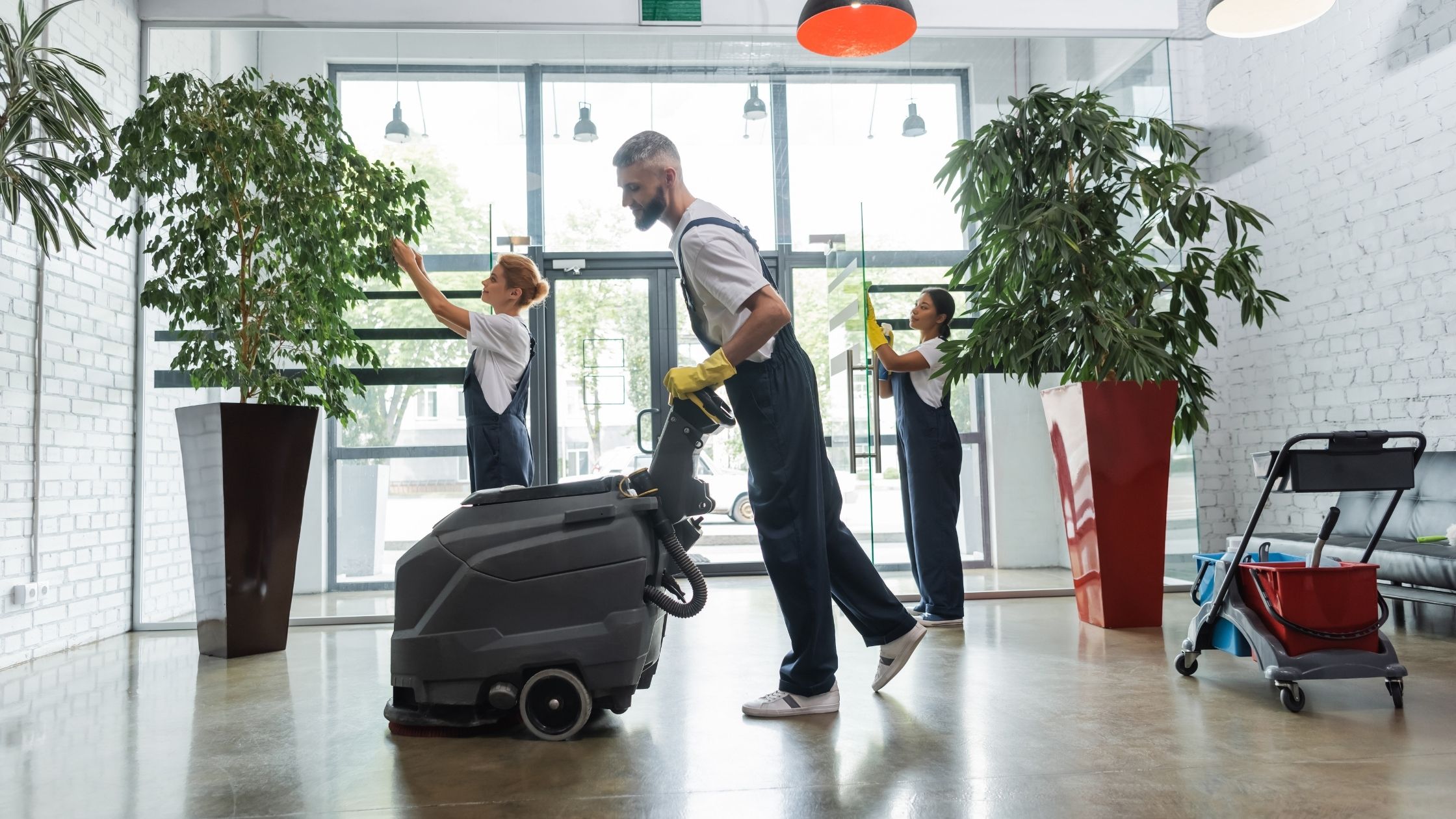
Regular cleaning keeps a commercial premises clean, presentable and safe. There's a point, though, where the everyday stuff stops cutting it. Sweeping, vacuuming, mopping. Not enough anymore.
You know the look. Floors gone dull. Marks that won't budge. Staining. A surface that just fights you every time someone tries to keep it clean.
That's the point to think about professional commercial floor cleaning.
So when is it actually necessary? Hard to give one answer. It rides on the flooring type, the foot traffic it takes, the sort of business you run, and what state the floor's in already.
Below we go through the signs your business floors need proper attention. The flooring types that respond well to specialist cleaning. And where treatments like floor stripping and resealing fit in.
Commercial floor cleaning is the professional cleaning and maintenance of flooring inside business premises.
Routine cleaning handles the day-to-day stuff. Dirt, dust, debris. Sweeping, vacuuming and mopping on a regular schedule.
Professional floor cleaning goes further than that.
Point it at a tired surface and, depending on the material and its condition, it deals with things like ingrained dirt and grime, stubborn marks and stains, scuff marks, and that built-up cleaning-product residue that keeps coming back. Heavy traffic areas. Dull, tired-looking surfaces. Floor finishes on their way out.
No single method covers every floor. A vinyl floor, a tiled floor, an industrial concrete floor. Treat all three the same and you'll get it wrong somewhere.
So it's assessed premises by premises. Condition and requirements first, not the same treatment slapped on every floor going.
Clearest sign of the lot: your usual routine stops getting the results it used to.
Floors still grey or dull shortly after a clean? There's usually a build-up of dirt or residue that ordinary mopping isn't lifting. Entrances, corridors and the other high-traffic spots are where you'll notice it first.
Don't just ramp up how often you clean. Work out whether the floor needs a proper deep professional clean instead.
Commercial floors take a hammering wherever people walk most.
Entrances. Reception areas. Corridors, stairways, the main walkways. All of it collects far more dirt than the quiet corners of a building. Give it time and you get darker walkways, visible traffic lanes, dull patches, scuffing and staining. A plain difference between the busy bits and the rest.
When some sections look a lot worse than others, professional hard floor cleaning helps pull the appearance back to something even.
Matters most in a business with heavy daily footfall. That's where the flooring ends up the most worn-looking thing on the premises.
A floor can be clean and still look knackered.
Once-bright or polished floor gone dull, cloudy, patchy? Mopping it more often won't touch it. Usual culprits are accumulated residue, surface wear, or a protective finish that's breaking down.
What you do next hangs on the material and its condition. Could be a deeper clean. Could be a maintenance treatment. Either way, find the cause first, then decide.
Some marks are just tougher than everyday dirt.
Commercial premises cop the lot. Scuff marks, spills, ground-in dirt, grease. Reaching for a harsher chemical every time isn't the fix. Wrong product or wrong method and you can wreck some flooring materials.
Professional commercial floor cleaners read the surface and pick an approach that suits the flooring type and the actual problem. Useful in a busy environment where the floor takes fresh dirt and marks every single day.
Floors going sticky, or getting dirty again fast after a clean? Cleaning-product residue is often behind it.
Use a product over and over, especially diluted wrong, and it leaves residue sat on the surface. A deeper clean strips that back before you go back to a normal routine cleaning programme.
Keeps returning? Take another look at the products and methods being used day to day.
Here's a quiet one. Your team grafting far harder for the same result.
A floor that used to be easy now wants repeated scrubbing, extra products, a lot more time on it. Worth asking why.
Professional floor cleaning doesn't have to replace your regular arrangements. It sits alongside them and clears the deeper build-up routine cleaning was never built for. Get a periodic professional clean in and your regular team maintains the surface far more easily afterwards.
Commercial flooring costs money, and the heavily used areas take real wear over the years.
Floors looking worn, tired, uneven? Get professional cleaning and maintenance looked at before it slides further. The right specialist treatment can lift the appearance of an existing floor and save you going straight to replacement.
Depends on the condition and flooring type, though. Always does.
Loads of commercial environments get something out of professional floor cleaning. What each one needs shifts with how the premises are used and the flooring that's down.
Office floors take a fair bit of traffic. Reception areas, entrances, kitchens, meeting rooms, corridors. The busy routes.
Regular office cleaning keeps a professional working environment going. But heavily marked surfaces, or floors losing their look, are where periodic specialist floor care earns its keep. A clean, well-kept floor also does a lot for how an office reads the second a client or visitor walks in.
Industrial sites are a different animal.
Factories, warehouses and other operational premises deal with heavier foot traffic, vehicle movements, dirt, dust, all sorts of industrial soiling. Hard floor and ground care becomes a real part of keeping the place running.
Right approach depends on the environment, the flooring, and what's going on inside the building.
Schools see high daily footfall. Entrances, corridors, the communal areas especially.
Floors have to cope with constant use and stay clean and presentable through it. Usually that's routine school cleaning plus periodic specialist floor care, pitched to the flooring and how hard it gets used.
Retail units, hospitality venues, healthcare environments, the rest of the customer-facing lot. Flooring matters here too.
It's often the first thing a visitor clocks. Clean, well-maintained floors feed straight into how the whole place comes across. And where customers come in regularly, dirty or visibly worn flooring makes an otherwise well-run building look neglected fast.
No one method works on every floor.
Commercial premises hold a wide range of hard flooring. Vinyl and luxury vinyl tile (LVT). Linoleum. Ceramic, porcelain and quarry tiles. Stone. Concrete. Plenty of other specialist commercial flooring on top.
Condition counts as much as the material. A fairly new floor wanting routine maintenance is nothing like an older surface carrying years of dirt, residue and worn finishes.
So you assess the flooring before settling on a method. Wrong product, wrong kit or wrong technique and you can damage a floor. Specialist cleaning has to account for the material every time.
Simplest way to hold it: routine cleaning is ongoing upkeep. Professional floor cleaning is what you bring in when a surface needs specialist attention. Here's how the two compare:
| Routine Floor Cleaning | Professional Floor Cleaning |
|---|---|
| Removes everyday dirt and debris | Tackles deeper soiling and build-up |
| Usually part of a regular cleaning schedule | Usually carried out periodically or when required |
| Sweeping, vacuuming and mopping | Specialist equipment and cleaning methods |
| Maintains day-to-day cleanliness | Addresses more difficult floor-care problems |
| Suitable for ongoing maintenance | Can help restore heavily soiled or tired-looking surfaces |
| Usually handled as part of regular cleaning | May require specialist knowledge and equipment |
Both earn their place.
Professional floor cleaning isn't there to replace your everyday programme. It picks up the problems routine methods were never meant to solve. Regular mopping keeps an office floor looking fine day to day. But it won't lift ingrained dirt, stubborn marks or accumulated residue. A professional clean sorts those before the floor turns into a fight to maintain.
The whole aim is a cleaning and maintenance programme that keeps your commercial flooring right over the long term.
No single schedule fits every business.
A busy industrial facility has nothing in common, floor-wise, with a small low-footfall office. Frequency turns on the flooring type, how many people use the premises, the daily foot traffic, the sort of business, how much dirt gets generated, outdoor conditions, whether vehicles or machinery run in the area, the condition of the floor, what cleaning you've already got, and whether the place is customer-facing.
Rather than booking a professional clean at some fixed interval out of habit, look at the condition and use of your flooring. Routine cleaning stopped delivering? Decent sign specialist floor care is due.
For some businesses it's a periodic, planned-maintenance job. For others it only comes up when a specific problem does. Fit the schedule to how the premises actually get used.
Some commercial floors want more than a deep clean.
Floor stripping and resealing is a specialist treatment. Strip the existing finish or build-up off a suitable floor, then lay down a fresh protective finish. It comes into play when the existing finish has gone off, when the floor's dull or patchy, when previous treatments have built up, when routine cleaning isn't restoring the look, when the floor needs more substantial maintenance, or when heavy traffic has worn the finish down.
It isn't right for every flooring material, mind.
Correct treatment depends on the floor type, the existing finish and the condition. Don't assume every tired floor needs stripping and resealing. A professional assessment tells you whether deep cleaning, maintenance or something else is the better shout.
Clean, well-kept floors feed straight into how a commercial premises looks and holds up. Dirty, stained or worn flooring drags down an otherwise well-run place, and that stings most where you're forever welcoming customers, clients and visitors.
There's the practical side too. Commercial flooring is in constant use, and busy offices, schools and industrial premises feel it most. Regular maintenance lets you deal with dirt and wear before the flooring turns into a much bigger job. Entrances, corridors and the other busy spots pick up dirt faster than anywhere else, and specialist cleaning takes the strain.
It catches problems early as well. A good floor-care programme runs alongside routine cleaning, clears the build-up ordinary methods struggle with, and flags trouble before the surface has gone so far that replacement's the only option left.
At LCS, commercial and industrial cleaning gets assessed around the individual premises. Not run as some one-size-fits-all service.
That way the cleaning accounts for the building, how it's used, the foot traffic and the condition of different areas. For businesses after specialist floor care, LCS provides floor cleaning inside its wider commercial cleaning services. Hard floor and ground care, and specialist floor cleaning included. On industrial premises especially, it folds into a wider cleaning programme alongside everything else.
One-off specialist floor clean, or floor care built into a bigger commercial cleaning programme, the first step's the same. Understand the condition of the premises and what the flooring actually needs.
Business floors getting harder to maintain? Contact LCS to talk through your commercial floor cleaning requirements.
No universal schedule. It rides on the flooring type, foot traffic, type of business and the condition of the floor. High-traffic commercial premises tend to need specialist cleaning more often than lower-use ones.
The professional cleaning and maintenance of flooring inside business premises. Depending on the surface and its condition, it stretches from deep cleaning and machine cleaning to specialist floor treatments.
Very. Routine mopping removes everyday dirt and keeps general cleanliness up. Professional floor cleaning brings in specialist equipment and methods for deeper soiling, residue and problems mopping won't resolve.
Plenty of them, yes. Ingrained dirt, scuff marks, build-up. The right method comes down to the flooring material and the type of mark or contamination.
A specialist treatment. It strips an existing finish or build-up off a suitable floor, then applies a fresh protective finish. It doesn't suit every flooring type, so the surface gets assessed first.
No. Some get by fine on effective routine cleaning. It's the premises with heavy footfall, specialist flooring or serious build-up that benefit from periodic professional floor care.
Comes down to the size of the area, the type and condition of the flooring, the level of soiling and the treatment needed. A professional assessment is the best way to pin down what the work actually involves.
If your business floors are getting harder to maintain, the first step is a proper look at the premises and what the flooring actually needs. Speak to LCS about your commercial floor cleaning requirements.
Get in touch